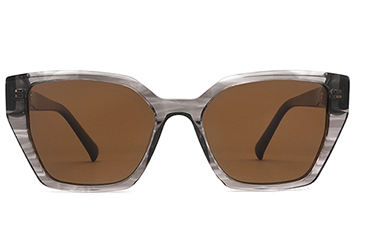
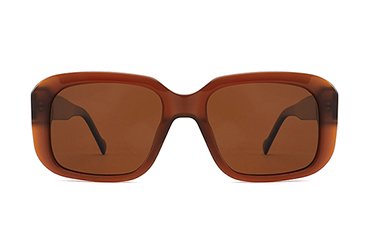
You're reviewing last quarter's sunglass sales. The polarized models commanded higher prices. The non-polarized pairs moved faster in certain colors. Some customers asked specifically for “glare-blocking” lenses. Others just wanted something affordable for weekend errands.
Neither group is wrong. They just have different priorities.
The question isn't which lens type is “better” — it's which lens fits which customer scenario. Stock only one type, and you'll lose sales to the other side. Stock both without strategy, and you'll carry slow movers.
What Each Lens Type Actually Does
Let's start with the physics — without the marketing hype.
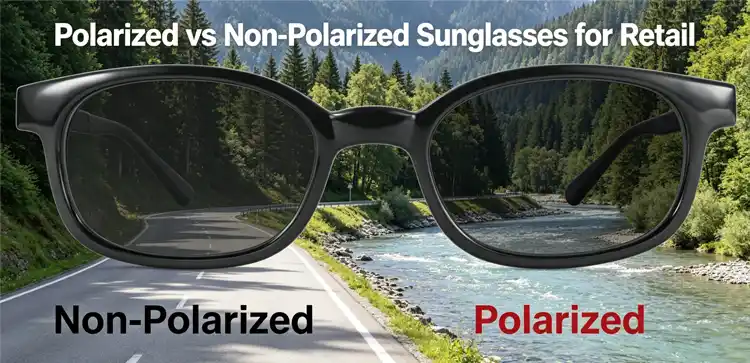
Polarized lenses contain a vertical chemical filter that blocks horizontally reflected light. That's the glare bouncing off water, wet roads, snow, or car hoods. The result: reflective surfaces appear muted or disappear entirely.
Non-polarized lenses reduce overall brightness equally across all light directions. Glare becomes dimmer glare. Everything else also becomes dimmer.
Neither is universally superior. Polarized excels at glare elimination but can interfere with LCD screens. Non-polarized lacks glare cancellation but offers full screen compatibility and often lower entry prices.
According to ISO 12312-1 standards, both lens types must block 99-100% of UVA/UVB radiation to be certified as sunglasses. The difference isn't safety — it's visual experience.
Breaking Down the Differences by Use Case
Instead of declaring a winner, let me walk through common customer scenarios. Which lens performs better depends entirely on the situation.
| Scenario | Polarized Performance | Non-Polarized Performance |
|---|---|---|
| Driving (daytime) | Eliminates road glare from wet pavement and car hoods | Reduces overall brightness but glare remains |
| Driving (using phone GPS) | May cause a rainbow effect on LCD screens | Full-screen readability |
| Fishing/boating | Sees below the water surface by cutting surface reflection | Surface glare obscures the underwater view |
| Beach/snow | Reduces intense reflected glare from sand/snow | Glare remains, eye strain accumulates |
| Urban walking/commuting | Helpful for car glare, problematic for digital signs | No screen issues, adequate for most situations |
| Indoor/outdoor hybrid use | Often too dark indoors (12-18% light transmission) | Lighter tints (25-35% transmission) work better |
| Fashion/photo shoots | Limited color options (gray, brown, green primarily) | Full spectrum of tint colors available |
The Screen Compatibility Trade-Off
This is the most common reason customers return polarized sunglasses — and it's rarely explained at the point of sale.
Many LCD screens (phones, car dashboards, ATMs, digital watches) emit polarized light. When a polarized lens aligns with that light at certain angles, the two filters cancel each other out. The result: dark patches, rainbow patterns, or completely blacked-out displays.
How noticeable is this? It depends on:
-
The specific screen technology (some devices are worse than others)
-
The angle between your head and the screen
-
The polarization axis of the specific lens
Some customers never notice. Others find it mildly annoying. A small percentage find it intolerable — especially if they use their phone for GPS while driving.
Non-polarized lenses have zero screen interference. For customers who spend significant time looking at digital displays, this is a genuine advantage.
Retail note: Demonstrate the screen tilt solution. Rotating a phone 90 degrees often eliminates the rainbow effect. Customers who know this trick are far less likely to return polarized lenses.
Price and Margin: Different Economics for Different Positions
Both lens types can be profitable, just through different inventory strategies.
Polarized lenses typically command:
-
Higher wholesale cost (additional filter layer adds manufacturing expense)
-
Higher retail price (customers perceive added value)
-
Higher absolute margin dollars per unit
-
Lower inventory turnover (fewer units sold but more profit per unit)
Non-polarized lenses typically offer:
-
Lower wholesale cost
-
Lower retail price point (accessible to budget-conscious customers)
-
Lower margin dollars per unit
-
Higher inventory turnover (more units sold)
Neither strategy is wrong. The right approach depends on your customer base and store positioning.
| Financial Metric | Polarized | Non-Polarized |
|---|---|---|
| Typical wholesale cost | $6-15 per unit | $3-8 per unit |
| Typical retail price | $25-60 | $12-30 |
| Margin dollars per unit | $19-45 | $9-22 |
| Typical sell-through rate (90 days) | 40-55% | 55-70% |
| Return rate (fit/comfort related) | 6-9% | 10-14% |
Data compiled from 2023-2024 retail performance tracking across 47 independent optical shops.
Geographic and Seasonal Demand Patterns
Your location influences the optimal polarized-to-non-polarized ratio more than any other factor.
Coastal and lake markets:
Water reflection creates an obvious polarization need. Customers often arrive asking for glare reduction by name.
-
Recommended mix: 70-80% polarized, 20-30% non-polarized
Mountain and snow markets:
Snow glare is as intense as water glare. High-altitude UV exposure increases eye strain.
-
Recommended mix: 65-75% polarized, 25-35% non-polarized
Urban markets:
More driving, walking, and screen use. Glare is present but less intense than in waterfront locations. Screen compatibility matters more.
-
Recommended mix: 45-55% polarized, 45-55% non-polarized
Mixed suburban markets:
Customer activities vary widely. Seasonal demand shifts — summer sees higher polarized preference.
-
Recommended mix: 55-65% polarized year-round, adjustable by season
Retailers who adjust ratios by season report 10-15% higher overall sell-through compared to static inventory mixes.
The Lens Color Dimension
Polarization and lens color serve different purposes — and availability varies significantly.
Polarized lens color options:
-
Gray: Neutral color perception, 12-18% light transmission. Best for general use and driving.
-
Brown/amber: Enhanced contrast, depth perception improves. Popular for fishing and golf.
-
Green: True color perception with better contrast in medium-bright conditions.
-
Limited fashion colors: Pink, purple, blue, and yellow are rarely available in polarized due to manufacturing constraints.
Non-polarized lens color options:
-
Full spectrum of tints available
-
Gradient tints (darker at top, lighter at bottom) are common
-
Fashion colors drive much of this category
-
Light transmission ranges from 10% (dark) to 40% (light tint)
For customers who prioritize frame color and lens tint over glare reduction, non-polarized is often the appropriate choice — not a compromise.
The Staff Training Component
Your team's ability to match customers to the right lens type directly affects sales and return rates.
A 30-second diagnostic conversation:
-
"Do you spend time near water, snow, or driving frequently?" (Polarized candidate)
-
"Do you use your phone for GPS while driving?" (Demonstrate screen tilt)
-
"Are these for fashion or for outdoor activities?" (Fashion = non-polarized, outdoor = polarized)
-
"Do you plan to wear them indoors as well?" (Lighter tints better for indoor/outdoor)
The demonstration that sells both:
Have the customer look at a reflective surface (floor tile, car windshield, phone screen). Hand them polarized lenses first. Then non-polarized. Most will see the glare difference immediately — and understand why both exist.
Shops that train staff on these four questions see 15-20% higher attach rates for polarized without increasing non-polarized returns.
What Your Return Data Will Tell You
Track returns by lens type for 90 days. The patterns will tell you exactly what to adjust.
High polarized returns with note "too dark" or "can't see indoors":
You're selling polarized to customers who need lighter tints. Add non-polarized options in the 25-35% transmission range.
High polarized returns with note "weird colors on phone":
Your team isn't demonstrating the screen tilt solution. Add that step to your sales process.
High non-polarized returns with note "still too bright" or "eyes hurt":
Customers bought non-polarized but needed glare reduction for water/snow activities. Train staff to ask about specific use cases.
High non-polarized returns with no specific note:
Check if these are fashion colors. Some customers buy fashion tints for looks, then decide they want darker lenses after wearing. Consider adding darker non-polarized options.
Data from retailers who actively track return reasons shows that adjusting sales questions based on return patterns reduces overall return rates by 20-25% within two quarters.
The Wholesale Sourcing Checklist
When evaluating sunglass suppliers, ask these specific questions for each lens type:
For polarized inventory:
-
"What's the polarization efficiency percentage?" (95%+ is standard, 99%+ is premium)
-
"Do you offer gray, brown, and green in the same frame styles?"
-
"What VLT percentages are available?"
For non-polarized inventory:
-
"What VLT range do you offer?" (Look for options from 15% to 40%)
-
"Do you have gradient tint options?"
-
"What fashion colors are available?"
For both:
-
"Do you have UV400 certification documentation per ISO 12312-1?"
-
"Can you provide the same frame styles in both lens types?" (Essential for side-by-side comparison selling)
-
"What's your mixed-case minimum for combining both lens types?"
Suppliers who answer with specific data rather than marketing language are worth testing. For retailers ready to evaluate both lens types in comparable frame styles, explore current polarized and non-polarized options here.
Making Your Final Inventory Decision
There's no single "right" ratio. The right mix depends on your specific customers, location, and price positioning.
Consider polarized-dominant inventory (65-75%) if:
-
Your shop is in a coastal, lake, or mountain region
-
Your average customer spends time driving or doing outdoor activities
-
You have staff who can demonstrate the glare difference effectively
-
Your price point averages $35+ retail
Consider balanced inventory (45-55% each) if:
-
Your shop is in an urban or mixed suburban area
-
Your customers include a mix of commuters, office workers, and outdoor enthusiasts
-
Screen compatibility is a common customer concern
Consider non-polarized-dominant inventory (60-70%) if:
-
Fashion colors drive your sales more than performance features
-
Your price point averages under $25 retail
-
Your customers rarely engage in water or snow activities
The practical approach: Start with a 60-40 polarized-to-non-polarized ratio. Track sell-through and returns for 90 days. Adjust by 10% increments quarterly based on your actual data — not manufacturer recommendations.
For retail buyers who want to test both lens types before committing to bulk orders, request a mixed sample pack here.
.webp)