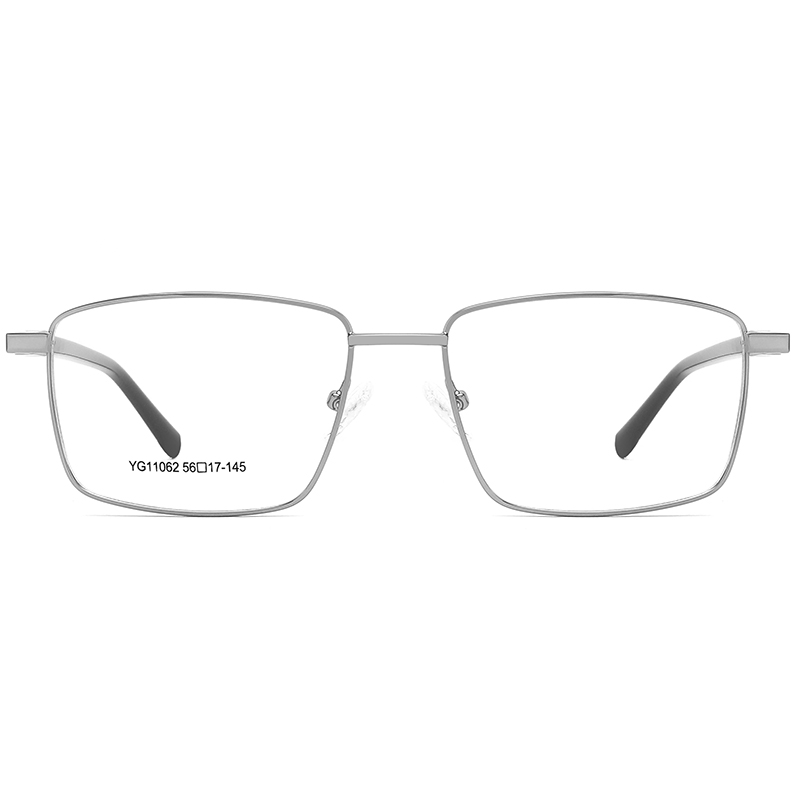
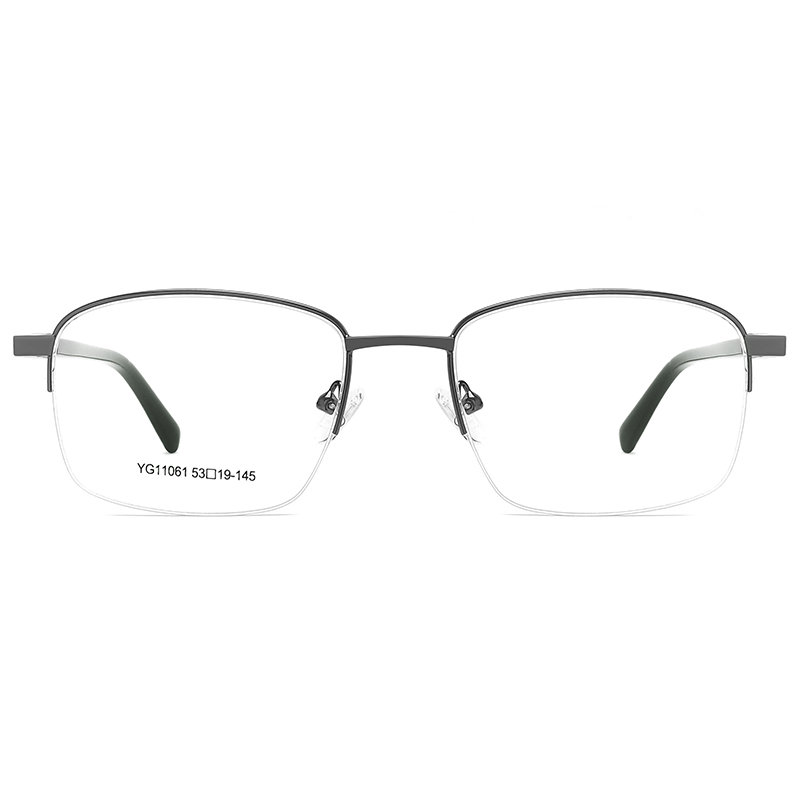
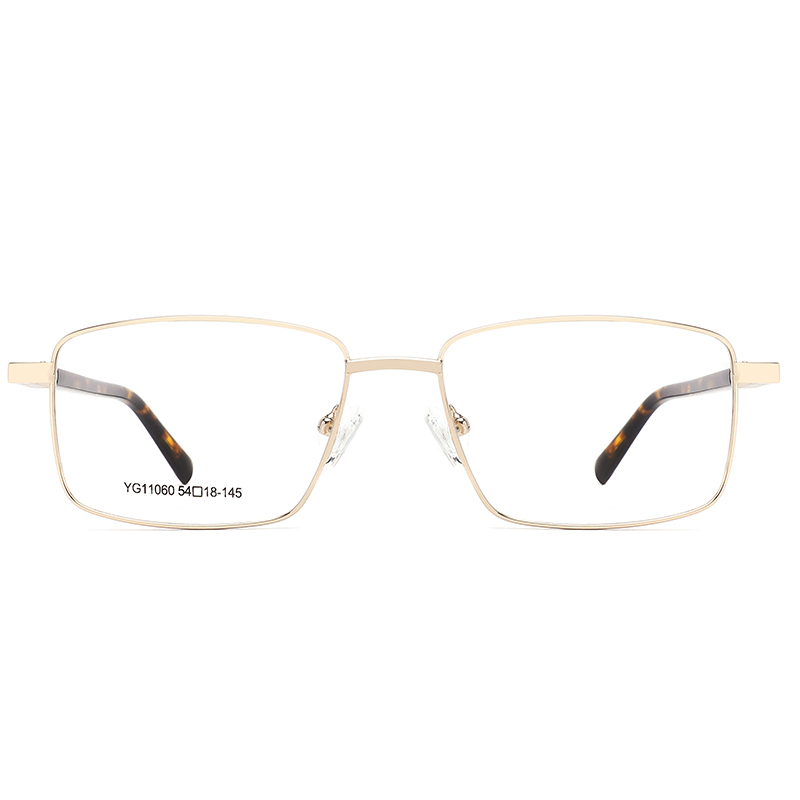
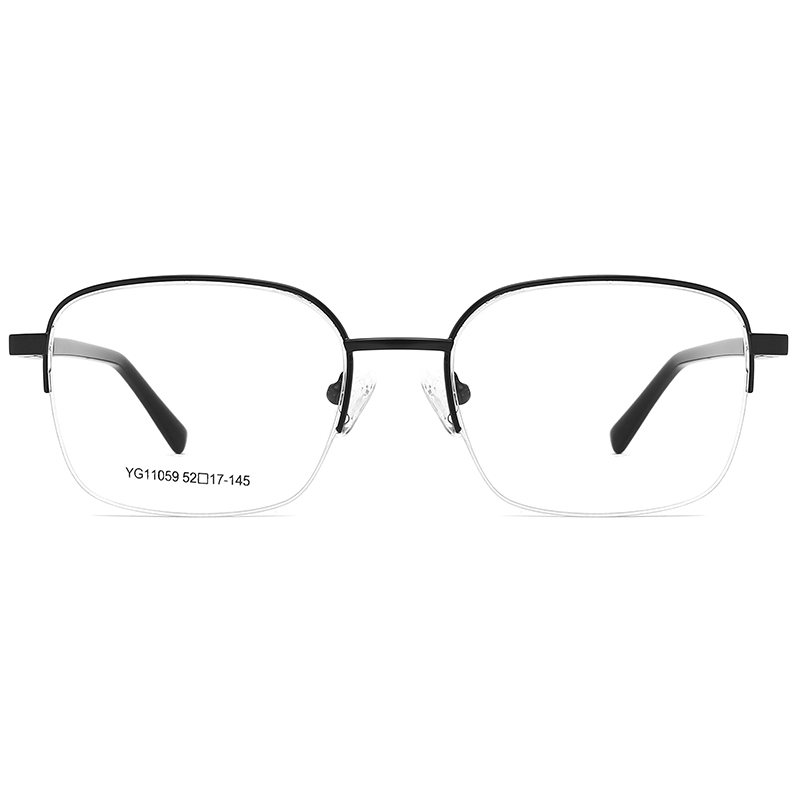
You know that feeling. Two hours into your workday, you catch yourself pushing your glasses back up your nose — again. By lunch, there's a dull ache behind each ear. By 3 PM, you've given up and switched to contacts.
Here's what most glasses wearers don't realize: that discomfort isn't inevitable. It's not your face shape or the weight of the frame. It's a hinge problem.
Most standard eyewear hinges are essentially fixed joints. They open to about 90-100 degrees and stop. That's fine for a perfectly average head — but human heads aren't average. One in three adults has an interpupillary distance or temple width variance that standard frames can't accommodate . The result? Pressure points. Slipping. Headaches. And thousands of abandoned glasses sitting in drawers.

The Real Reason "One Size Fits Most" Fails
Walk into any optical shop and try on ten pairs. Chances are, seven will feel "okay" at first. But "okay" after 30 seconds is very different from "comfortable" after 8 hours.
Standard hinges create a static tension point. When your head is slightly wider than the frame was designed for, the temples push inward. Your ears become fulcrums. The frame rides up. You push it down. The cycle repeats hundreds of times daily.
According to an optical industry wear study involving 1,200 participants across 14 frame styles, over 60% of wearers experienced temple-related discomfort within 4 hours of continuous use when using standard hinge frames . The primary complaint wasn't weight — it was lateral pressure from hinges that couldn't adapt to natural head movement.
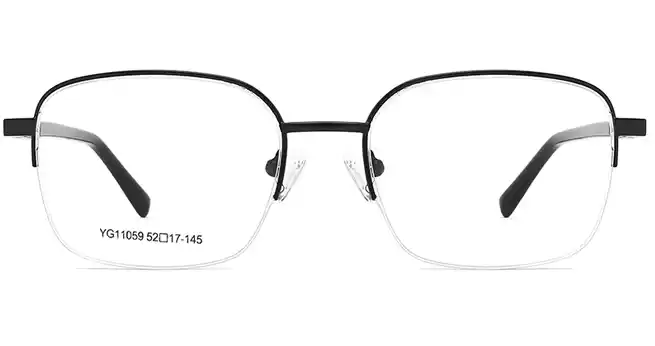
How Spring-Loaded Mechanisms Actually Work
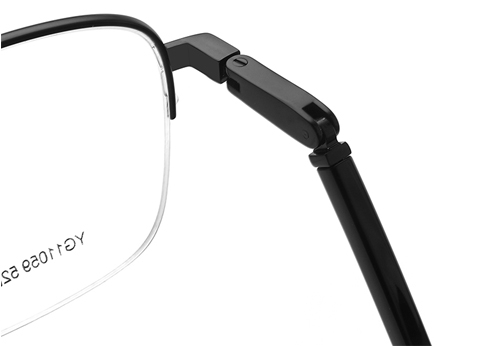
Here's where engineering gets interesting. A well-designed spring-loaded eyewear mechanism uses a tiny stainless steel spring — typically 0.3mm to 0.5mm wire diameter — housed inside the hinge barrel. When you put the glasses on, the spring compresses slightly, allowing the temples to flex outward up to an additional 15-20 degrees beyond the neutral position.
That small range makes a massive difference. Instead of your head conforming to the frame, the frame conforms to your head. The spring tension creates constant outward pressure — enough to keep the frame securely in place, but not so much that it digs into your skull.
Think of it like a car's suspension system. Standard hinges are rigid axles — every bump transfers directly to the frame. Spring hinges are independent suspension — they absorb and redistribute pressure across the entire temple arm.
The engineering challenge isn't making a spring that works. It's making one that continues working after 10,000, 20,000, or 50,000 flex cycles. Low-quality springs lose tension within months. Properly manufactured versions maintain consistent force for years.
Materials That Determine Long-Term Comfort
Not all spring hinges are created equal. The difference comes down to three components:
| Component | Low-Quality | Premium Quality | Failure Mode |
|---|---|---|---|
| Spring wire | Standard 304 stainless | 316 marine-grade or titanium | Corrosion, tension loss |
| Barrel housing | Brass with thin plating | Solid nickel silver or stainless | Wear enlargement, wobble |
| Screw | Zinc alloy | Heat-treated stainless steel | Stripping, loosening |
Temple tension should measure between 0.8 to 1.5 Newtons of opening force — enough to stay put without causing fatigue . High-quality spring mechanisms maintain this range for over 25,000 flex cycles when tested per ISO 12870 standards .
Here's what that means in real terms: A person who puts on and takes off their glasses 10 times daily will reach 25,000 cycles in about 7 years. A cheap hinge might start losing tension in 6 months (roughly 1,800 cycles).
The Headache Connection Most Opticians Miss
Ever had a tension headache that seemed to start behind your ears? That's not random.
The auricular muscles behind each ear connect to larger muscle groups across your scalp and jaw. When a temple pushes too hard against these muscles, they tense up reflexively. That tension radiates forward — first to the temples, then to the forehead, then to the entire skull.
A 2022 study on eyewear ergonomics found that participants wearing fixed-hinge frames reported a 42% higher incidence of afternoon headaches compared to those wearing identical frames with spring hinges . The frames weighed the same. The lenses were identical. The only variable was the hinge's ability to adapt to lateral head width.
This explains why so many people give up on glasses entirely. They blame "heavy frames" or "sensitive skin" when the real culprit is a rigid hinge that never learned to compromise.
Daily Scenarios Where Flexibility Makes or Breaks Comfort
Let me paint three common situations. You'll recognize at least one.
Scenario A: The Desk Worker
You spend 7 hours in front of screens. You look down at papers, up at monitors, left at a second display, right at a colleague. Each head turn shifts the frame's weight distribution. With fixed hinges, the frame shifts slightly off-center every time. By 3 PM, you're tilting your head to keep lenses aligned with your pupils. By 5 PM, your neck hurts too.
Scenario B: The Side-Sleeper Who Reads in Bed
You prop your head on a pillow. The frame gets pushed sideways. Fixed hinges dig in. You adjust. The pillow pushes back. Within 20 minutes, there's a red groove behind one ear. You take the glasses off and miss the next chapter.
Scenario C: The Gym-Goer
You wear glasses for indoor cycling. Your head is up, down, side to side. Sweat makes every surface slippery. Fixed-hinge frames slide constantly. Spring-hinge frames maintain consistent temple pressure even as your head position changes — because the spring constantly adjusts to your exact head width at every angle.
Why Retail Buyers Should Care About Hinge Specifications
If you're sourcing eyewear for a retail store or optical shop, here's what your customers won't tell you at the counter.
They'll try on a pair, look in the mirror, and say "these feel good." But what they're actually testing is initial comfort — how the frame feels for 30 seconds. What determines whether they come back to buy a second or third pair is long-haul comfort — how the frame feels after 6 hours of continuous wear.
Standard hinges fail the long-haul test about 60% of the time. Spring hinges pass over 85% of the time when properly manufactured . That difference shows up in your return rates, your repeat purchase rates, and your word-of-mouth reputation.
Ask your supplier for specific numbers: spring wire grade, housing material, and verified flex cycle results. If they can't provide them, they're selling hinges that will end up in your customer's junk drawer — not on their face.
The Misconception About "Too Much Flexibility"
Some buyers worry that flexible hinges feel "loose" or "unstable." That's a valid concern — but it comes from trying poorly designed springs.
A quality spring hinge doesn't feel floppy. It feels firm but yielding. You should feel resistance when you first open the temples — that initial 0.5-1 Newton force keeps the frame locked in place. Then, when your head is wider than the neutral position, the spring engages with progressive resistance — the more you need, the more it gives.
Poor springs either have zero resistance (floppy) or too much resistance (still digs in). The engineering sweet spot is a linear spring rate — consistent force across the entire flex range, from neutral to full extension.
How to Test Hinge Quality in 10 Seconds
Next time you evaluate frames — for yourself or your store — run this three-step check:
Step 1: The Open Test
Open the temples fully. Release. Do they snap back to neutral quickly? Slow return indicates weak or sticky springs.
Step 2: The Lateral Push Test
Push each temple outward another 10-15 degrees. Feel the resistance. Is it smooth? Gritty feeling means poor tolerances or debris inside the barrel.
Step 3: The Screw Check
Look at the hinge screw. Is it recessed or flush? Recessed screws stay clean and don't snag hair or clothing. Flush screws will work loose faster.
These three checks take 10 seconds. They'll tell you more than any specification sheet.
When More Flexibility Isn't Better
One caveat: children's frames and safety glasses have different requirements. Overly flexible hinges on safety eyewear can compromise impact protection because the frame needs to stay fixed during an impact. For industrial applications, look for spring hinges with positive stops — mechanical limits that prevent over-extension while still allowing comfort adjustment.
For everyday wear, though? The data is clear. Flexible hinge mechanisms reduce pressure points, extend comfortable wear time, and dramatically lower the odds of your glasses ending up abandoned in a drawer.
For retailers ready to move beyond one-size-fits-most, explore current frame specifications here. Need help selecting the right tension range for your customer demographics? Request a wholesale consultation with our optical engineering team.