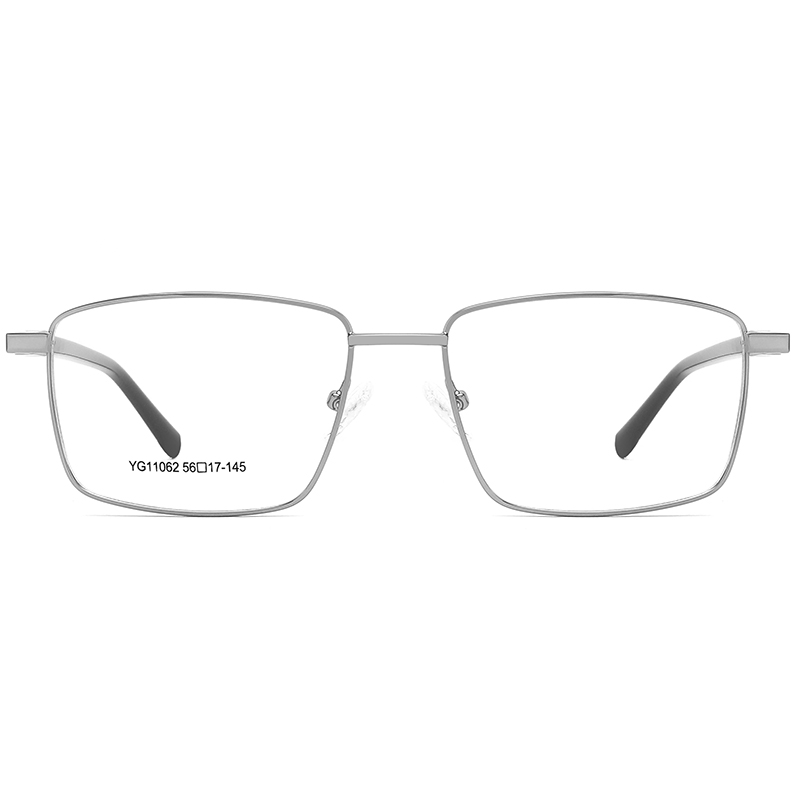
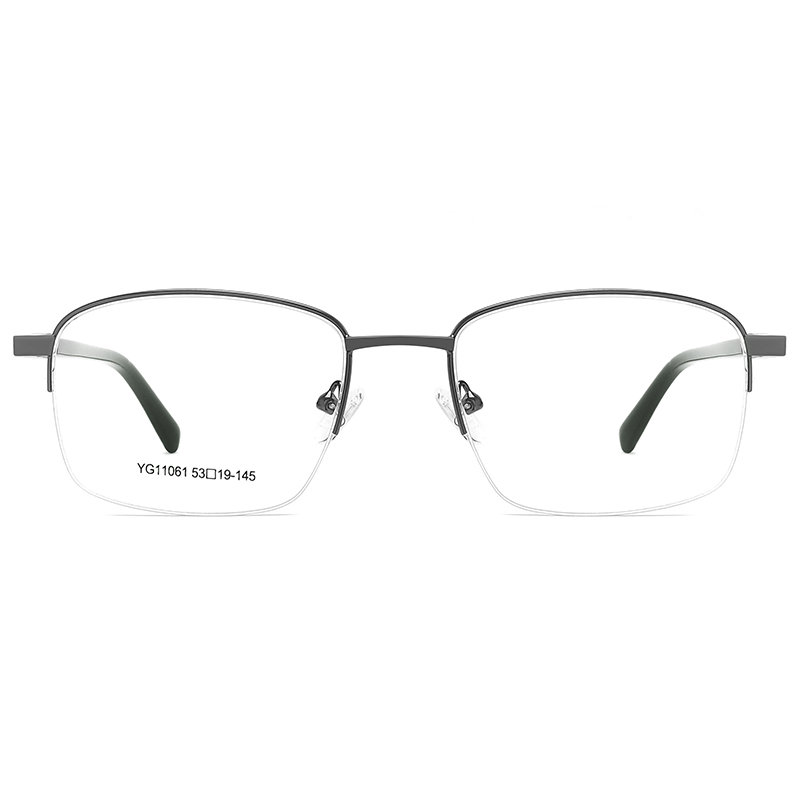
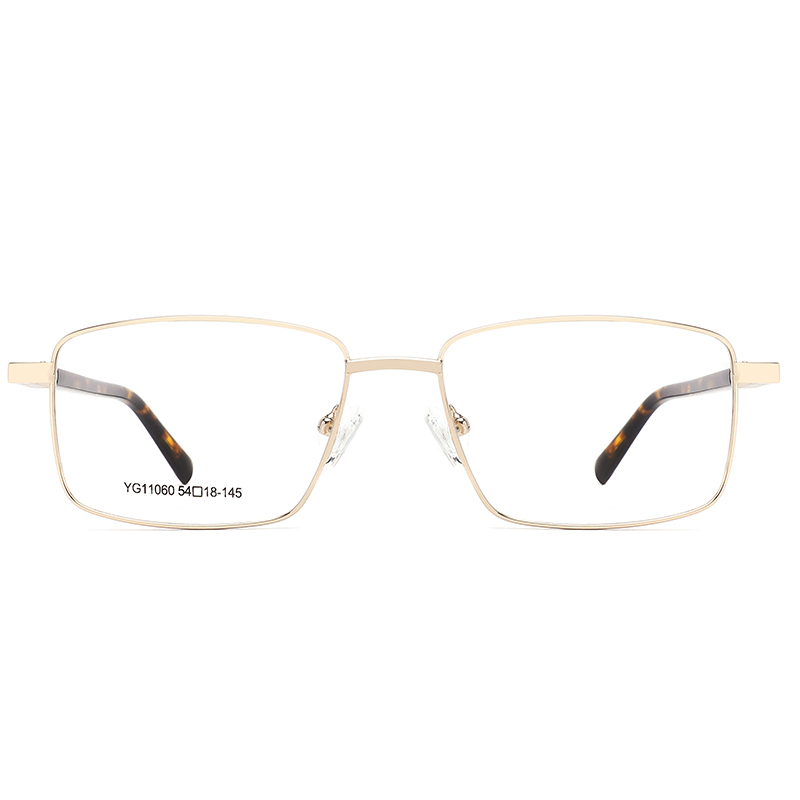
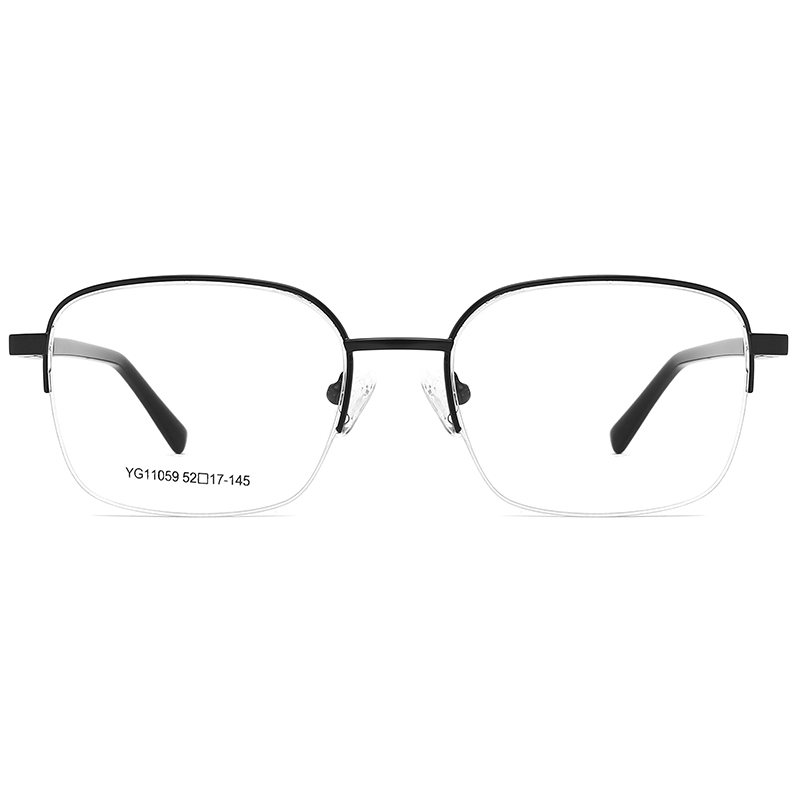
You know the drill. You buy a nice new pair of spectacles. They feel great in the store. Two months later, you're pushing them back up your nose every few minutes. By afternoon, there's a dull ache behind your ears.
Most people blame the fit. Or the weight. Or their "weird-shaped head."
But here's what actually happens: the hinge type determines whether your frames stay comfortable after 100, 1,000, or 10,000 wears. And most standard spectacles use a hinge design that gradually loses its grip — not because anything's broken, but because it was never designed to adapt to your daily movements.
Why Your Glasses Won't Stay Put — The Hidden Culprit
Walk into any optical shop and try on ten frames. Almost all will feel acceptable for 30 seconds. That's the problem. Initial fit tells you almost nothing about long-haul comfort — how the frame behaves after hours of talking, turning your head, looking down at a phone, and taking glasses on and off.
Standard barrel hinges are simple mechanical joints. They open to about 90-100 degrees and stop. The temple arms maintain tension through friction alone — specifically, the friction between the hinge screw and the barrel walls.
Here's what that means in real life: Every time you put on or remove your glasses, the hinge experiences micro-abrasion. The screw wears against the barrel. The friction decreases. The temples loosen. Your frames start sliding.
According to ISO 12870 flex cycle testing standards, standard hinges typically show measurable temple width increase after 5,000 open-close cycles — roughly six months of normal use for most people.
The Engineering Difference Nobody Explains
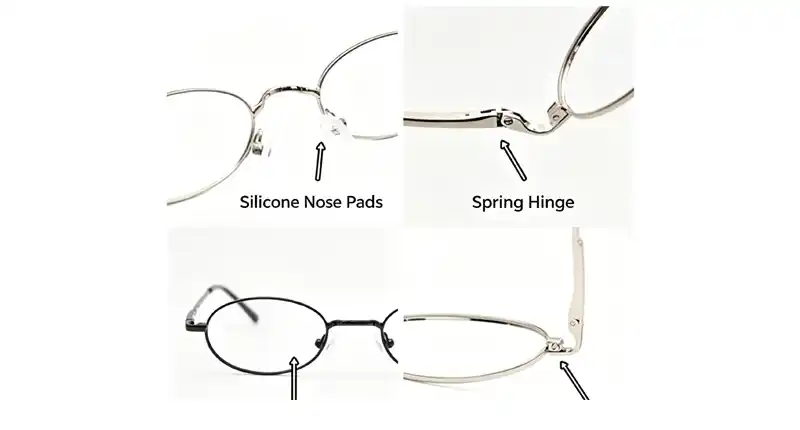
A flexible frame mechanism — often called a spring hinge — solves this problem in a fundamentally different way. Instead of relying on friction to hold the temple position, a spring-loaded hinge uses a stainless steel spring (typically 0.3-0.5mm wire diameter) housed inside the hinge barrel.
When you put the glasses on, the spring compresses slightly, allowing the temple to flex outward an additional 15-20 degrees beyond the neutral position. The spring provides constant outward pressure — enough to keep the frame securely in place, but not so much that it digs into your skull.
Here's the critical engineering insight: The spring, not the screw, maintains temple tension. Even if the screw loosens slightly over time, the spring continues providing consistent force. This is why flexible hinge frames maintain their original fit dramatically longer than rigid designs.
But not all flexible hinges perform equally. The difference comes down to three components:
| Component | Standard Hinge | Basic Flexible Hinge | Premium Flexible Hinge |
|---|---|---|---|
| Tension mechanism | Friction only | Basic steel spring | 316 marine-grade or titanium spring |
| Housing material | Brass with thin plating | Solid stainless steel | Nickel silver or titanium |
| Flex cycle rating | <5,000 cycles | 10,000-15,000 cycles | 25,000+ cycles |
| Corrosion resistance | Low (sweat sensitive) | Medium | High (salt spray tested) |
| Adjustability | None | Limited | Precision micro-adjust |
Real-World Testing: What 25,000 Cycles Actually Means
Let me put these numbers in perspective. A person who puts on and removes their glasses 10 times daily will reach 5,000 cycles in about 17 months. A standard hinge often shows noticeable loosening before that point — sometimes as early as 3 months (roughly 900 cycles).
A premium flexible hinge rated for 25,000 cycles, by contrast, would last over 6 years at the same usage rate — and still maintain original temple tension.
Independent testing per ISO 12870 procedures shows additional differences:
-
Standard hinges: Average tension loss of 40-60% after 10,000 cycles
-
Basic spring hinges: Average tension loss of 15-25% after 10,000 cycles
-
Premium spring hinges: Average tension loss of under 10% after 25,000 cycles
Beyond longevity, flexible hinges dramatically improve daily comfort in ways that don't show up in lab tests. The ability to flex outward means the frame conforms to your exact head width at every angle — not just in the neutral position.
The Real-Life Scenarios Where Hinge Type Matters Most
The Desk Worker (9+ hours continuous wear)
You look down at papers, up at monitors, left at a second screen, right at a colleague. Each head turn shifts the frame's weight distribution. A rigid hinge transfers every movement directly to your ears. A flexible hinge absorbs those micro-shifts, maintaining consistent contact pressure. Users report significantly less ear soreness by late afternoon with spring-loaded designs.
The Parent of Young Children
A toddler grabs your glasses. A rigid hinge bends at the bridge or — worse — snaps at the screw joint. A flexible hinge extends to its limit, absorbs the force, and returns to original position. According to optical repair data, frames with spring hinges are significantly less likely to require professional repair after accidental pulls.
The Active Wearer (walking, commuting, light sports)
Every step creates vibration. That vibration travels up through your skull to the frame contact points. Rigid hinges transmit this vibration directly. Flexible hinges dampen it through spring action. The difference is noticeable — spring hinge wearers report less "head fatigue" after hours of walking or commuting.

The Hidden Cost of Rigid Hinges (Beyond Discomfort)
Here's what optical retailers know but rarely say: Rigid hinge frames drive repeat purchases not because customers love them, but because they wear out.
A frame that loosens after six months doesn't get repaired. Most people don't know hinges can be tightened (they can — a 30-second adjustment with a small screwdriver). But even tightened, a worn barrel won't hold tension like a new one. The friction surface is already damaged.
So the customer buys a new pair. The cycle repeats. They assume all glasses do this.
Spring hinges break this cycle. A properly manufactured flexible hinge maintains its tension for years. The frame outlives the prescription change — which is exactly when customers choose to buy new glasses, not when they're forced to.
The Skin Contact Factor Nobody Mentions
Flexible hinges offer another benefit that's rarely discussed: reduced skin irritation.
Rigid hinges create fixed pressure points. If the frame is even slightly too narrow for your head, the temples press continuously into the same spot behind your ears. Over hours and days, this causes:
-
Localized redness
-
Skin breakdown in severe cases
-
Contact dermatitis from constant friction
Spring hinges distribute pressure across a broader area because the temple can adjust to your exact head width. The spring provides consistent force without concentrating pressure. For wearers with sensitive skin or those who wear glasses 12+ hours daily, this difference is immediately noticeable.
Maintenance Reality: What Actually Breaks
Let me be direct about longevity.
Standard hinge problems:
-
Screws work loose (requires tightening every 3-6 months)
-
Barrel wears oval-shaped (irreparable once this happens)
-
Temple tips lose grip from constant readjustment
-
Frame alignment drifts over time
Spring hinge problems:
-
Springs can fail (rare in quality manufacturing — under 2% failure rate in premium components)
-
Screws still need occasional checking (every 12-18 months)
-
More complex mechanism means more expensive replacement if damaged
The pragmatic take: Standard hinges are simpler and cheaper to replace. Spring hinges are more reliable and comfortable long-term but cost more upfront and require specific replacement parts.
For most daily wearers — especially those who wear glasses 8+ hours daily — the comfort and longevity benefits of quality spring hinges substantially outweigh the slightly higher initial cost.
The 60-Second Hinge Quality Check
Next time you're evaluating frames — for yourself or for retail — run this quick test:
Step 1: The Open Test
Open the temples fully. Release. Do they snap back to neutral firmly? Slow or weak return indicates poor spring quality (or worn hinge).
Step 2: The Lateral Push Test
Push each temple outward another 10-15 degrees. Feel the resistance. Is it smooth? Gritty or uneven resistance means poor tolerances or debris inside the barrel.
Step 3: The Screw Check
Look at the hinge screw. Is it recessed or flush? Recessed screws stay clean and don't snag hair. Flush screws will work loose faster.
Step 4: The Wiggle Test
Open the frame halfway. Gently wiggle each temple vertically. Any play before screws naturally loosen? Excessive play means poor hinge machining — it will fail early.
Beyond the Hinge: What Else Determines Frame Longevity
While hinge type significantly impacts comfort and lifespan, it's not the only factor. Frame material, temple design, and wear habits all matter.
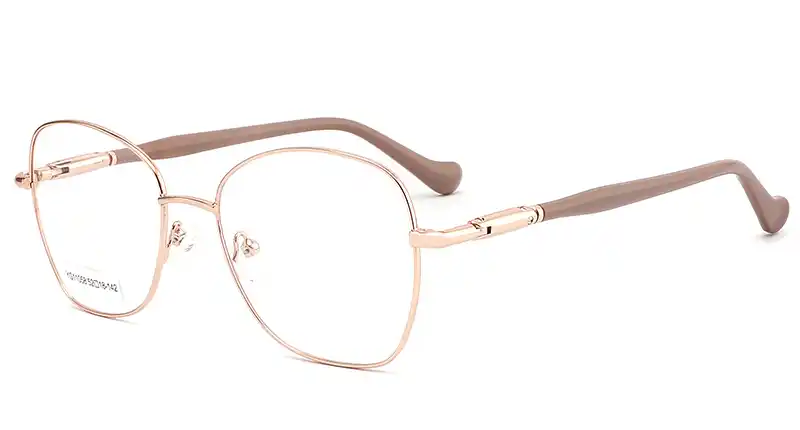
Acetate frames paired with spring hinges offer the best of both worlds: acetate's hypoallergenic, pressure-distributing properties with spring tension's consistent fit. Metal frames with standard hinges — especially those with nickel content — combine two failure modes: corrosion and loosening.
For retailers and wholesale buyers, the smart inventory strategy is not all spring hinges or all standard hinges. It's matching hinge type to customer use patterns:
-
Office workers, daily commuters, long-hour wearers → Prioritize spring hinges
-
Secondary/backup glasses, occasional wearers → Standard hinges may suffice
-
Children's frames → Spring hinges (for durability against pulls)
-
Budget-conscious first-time buyers → Standard hinges (lower entry price)
Understanding these tradeoffs allows you to stock intelligently — not just “premium” vs “budget,” but right-fit for each customer segment.
For retailers ready to evaluate flexible hinge frames for their inventory, explore current frame specifications here. Need guidance on which hinge type performs best for your specific customer demographics? Request a merchandising consultation.